Capital District Winter Garage Door Prep: An Albany Homeowner's Guide
LocalFix Garage Door Service
Why Albany winters are uniquely hard on garage doors
The Capital District sits in a weather corridor that funnels cold air down from Lake Ontario and the Adirondacks. Albany regularly sees stretches where overnight temps drop below 0°F — and those cold snaps do not ease slowly. Hardware that was rated for typical mid-Atlantic winters simply cycles through stress faster at 15 below than the manufacturer anticipated. Torsion springs in particular lose elasticity in extreme cold, which means a spring that was borderline in October often snaps in January during the first sharp cold-snap of the season.
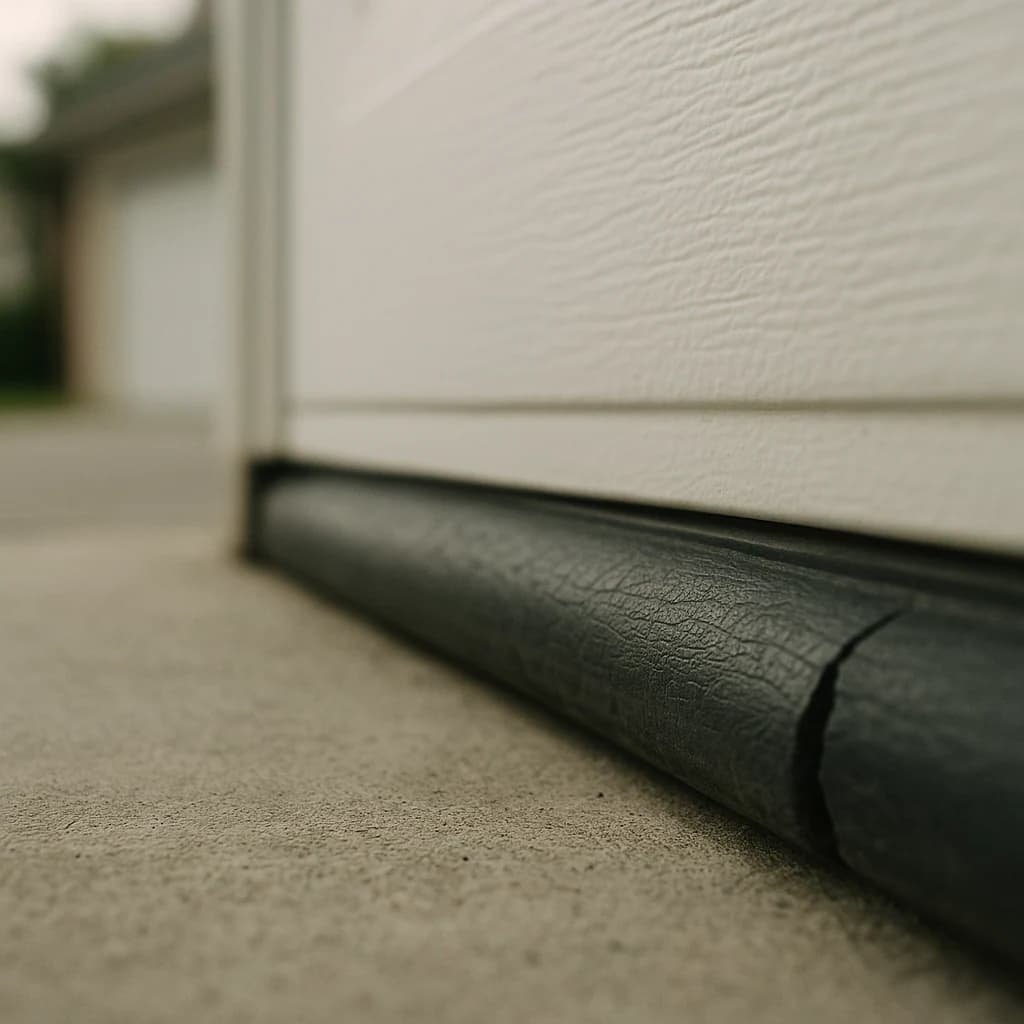
Freeze-thaw cycles compound the problem. When daytime temps climb above freezing and nightmares refreezes overnight, water that pooled in door-bottom weather seals expands and cracks the rubber. Once the seal cracks, cold air pours into the garage, moisture seeps under the door, and ice can form a bond between the door bottom and the concrete floor — creating a condition where your opener tries to lift against a frozen floor and burns out the motor or strips the drive gear.
LocalFix technicians based out of Albany have serviced doors across Guilderland, Colonie, Latham, Delmar, and Troy after every major cold-snap season. The pattern is consistent: the calls spike in late January after the first prolonged stretch below 10°F. Proactive prep in October and November dramatically reduces those January emergency calls.
Inspecting springs and cables before the cold arrives
Torsion springs are the single most consequential component to inspect before winter. A technician checks coil spacing — tight, uniform coils indicate a healthy spring; gaps in the coil spacing indicate a spring that has lost tension and is approaching failure. They also look for rust, which forms faster in humid Capital District fall weather and accelerates fatigue. Springs that show surface rust but still have even coil spacing may last another season with proper lubrication; springs with visible separation or significant rust pitting should be replaced before the first hard freeze.
Extension springs — the type that run along the horizontal track rather than across the header — also need inspection. These have safety cables threaded through them; if the safety cable is frayed or missing, a broken extension spring can become a projectile inside the garage. Albany homes with older doors, particularly those built before the mid-1990s, frequently still have extension spring systems that have never been updated. If you are not sure which type you have, look above the door when it is closed: a long horizontal coil spring on each side is extension; a single horizontal coil across the header is torsion.
Cables attach to the bottom corners of the door and wind around drums at the top. Frayed cables show individual wire strands broken or fanning out from the main cable bundle. A frayed cable is a failure waiting to happen — and cable failures tend to be sudden and complete, not gradual. Cold temperatures make steel cable less flexible, which accelerates the fatigue at the drum attachment point specifically.
- Check coil spacing on torsion springs — gaps signal lost tension
- Look for surface rust on springs and cables before it becomes pitting
- Verify safety cables are present on extension spring systems
- Inspect cable ends at drum attachment points for fraying
Weather seal replacement — the most overlooked winter prep step
The bottom seal and side seals on a Capital District garage door take punishment that warmer-climate seals never experience. Rubber compounds harden in sustained cold below 20°F, losing the flexibility that allows them to conform to minor floor irregularities. Once a seal hardens and loses conformance, cold air infiltration rises dramatically — and in an attached garage, that translates directly into higher heating bills and a colder garage workspace.
Bottom seals come in two common profiles: T-slot seals that slide into an aluminum retainer on the door bottom, and bead seals that press into a C-channel. T-slot seals are the easiest to replace yourself with a length of replacement rubber and five minutes. Bead seals require slightly more effort but are still a practical DIY task. The replacement seal for a standard 16-foot wide door costs $20 to $40 in materials; professional installation including seal and retainer is typically $80 to $120.
Side seals run along the door frame and compress against the door face when closed. These are often ignored until they visibly curl away from the frame — but they begin losing compression seal integrity well before that point. Press your hand against the side frame on a cold day with the door closed; if you feel air movement, the side seal has failed even if it looks intact. LocalFix replaces side seals with EPDM-rated material that maintains flexibility down to -40°F — a material upgrade over standard PVC seals that is worth the small additional cost in Albany conditions.
Lubricating for cold-weather performance
Standard hardware store spray lubricants — WD-40 and similar penetrating oils — are not appropriate for garage door springs and hinges in Capital District winters. They thin out in cold temperatures, wash away with the first warm spell, and leave components dry within a month. Worse, WD-40 can attract dirt that forms an abrasive paste inside hinge pivot points, accelerating wear rather than preventing it.
The correct lubricant for Albany garage door hardware is a lithium-based grease or a dedicated garage door lubricant rated for sub-zero temperatures. Apply it to torsion spring coils (a thin, even coat along the full spring length), hinge pivot points, roller bearings, and the slide track along the top horizontal section. Do not lubricate the bottom track — that is where you want friction, not slip, and lubricating it creates a surface that ice bonds to more readily.
One lubrication service before the cold sets in typically lasts through an Albany winter. If the door develops a grinding or squeaking noise in January, that is the signal that a spot re-application is needed — not a sign that something is broken.
Opener performance in sub-zero conditions
Garage door openers are rated by motor strength and cycle count — but they are not all rated for extreme cold. Belt-drive openers use a rubber belt that stiffens significantly below 20°F, increasing the load on the motor and sometimes causing the opener to struggle with doors it handled easily in summer. Chain-drive openers are more cold-tolerant but require the chain to be properly tensioned; a loose chain slaps and binds in cold weather.
The opener's circuit board and battery backup (on models that have it) are also cold-sensitive. Battery backup units typically specify a minimum operating temperature of 32°F or 40°F — in an unheated Albany garage, that threshold is routinely crossed. If your opener has a battery backup, bring the battery inside or keep the garage heated minimally during extended cold-snap periods.
If your opener is more than 10 years old and struggles in cold weather, that is a normal end-of-life symptom rather than a repairable fault in most cases. The decision to repair versus replace depends on the cost of the specific part failing — a gear-and-sprocket kit is a cost-effective repair; a new logic board on a 12-year-old unit is typically not. Our Albany technicians carry common repair parts and can quote both repair and replacement on the same visit.
Frequently asked questions
How do I get my garage door unstuck from a frozen floor?
Do not force the opener — you risk burning out the motor or cracking the door panel. Instead, use a heat gun or hair dryer along the bottom seal to melt the ice bond, then manually break the seal by pressing outward on the door bottom at the center. Once free, add a thin bead of silicone spray (not WD-40) along the bottom seal to prevent rebonding. If freezing recurs, the bottom seal or floor slope may need correction.
What temperature is too cold for a garage door spring to be safe?
There is no absolute cutoff, but springs that are already weakened or show surface rust become significantly more brittle below 0°F. The risk is not that the spring fails to lift — it is that a marginal spring that would have lasted through a warmer winter snaps suddenly in extreme cold. This is why pre-winter spring inspection matters in the Capital District specifically.
Can LocalFix do same-day service in Albany during winter storms?
We maintain same-day response for Albany and surrounding Capital District communities year-round, including during winter weather events. Call (518) 665-3630 and we will give you an honest ETA based on road conditions. Storm-day volume is high — booking the morning of gives you the best window.